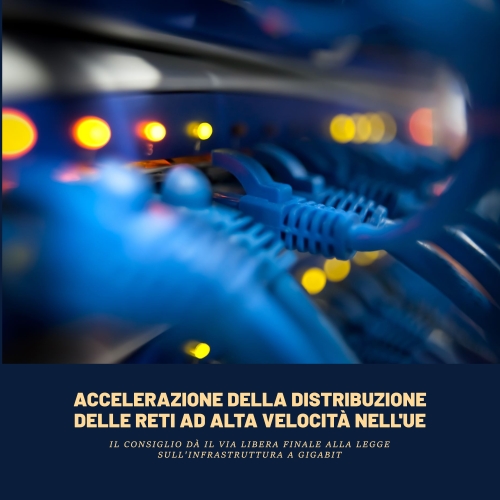
Bruxelles: EU Competition Commissioner Neelie Kroes stated: " For consumers and businesses to be able to reap the benefits of competitive very high speed broadband services, we need a common pan-European regulatory approach to NGA broadband networks. This consultation will help to ensure that the Commission Recommendation gives the necessary legal certainty to encourage large scale investment in new fibre infrastructure for very fast broadband internet services while safeguarding effective access to NGA networks for competitors."
EU Telecoms Commissioner Viviane Reding said: "High speed fibre networks are the new generation of broadband infrastructures in Europe. In order to give citizens and businesses across Europe access to fast broadband Internet, very large sums of private and also public money will need to be injected in the coming years. Investors therefore need to know the rules of the game. The aim of the planned Commission Recommendation on next generation access is to provide legal certainty for all players by providing national regulators across Europe with clear guidance on the regulatory approach to be taken. I call on all stakeholders to contribute actively to the new public consultation in order to help us achieve the right balance between effective competition in the broadband market and giving the right incentives for sustainable investment in Europe's high speed networks."
The revised draft Recommendation would include mechanisms to allocate investment risk between investors and access seekers. In particular, to foster market-driven investment outside densely populated areas, the draft Recommendation defines conditions under which co-investment schemes could be deemed pro-competitive. Under the draft Recommendation, deployment by the dominant operator of multiple fibres could justify less stringent regulatory obligations. The competitive advantage of having multiple fibres in the ground is that it allows immediate and undistorted infrastructure competition.
The revised draft Recommendation endeavours to develop a pan-EU common regulatory approach, which telecoms regulators would adapt to national market conditions. The approach proposed by the Commission aims at driving infrastructure-based competition where it is possible and efficient, while ensuring a seamless migration from copper to fibre-based networks.
The Commission organised a first public consultation on a draft Recommendation on the regulated access to Next Generation Access Networks in 2008 (see IP/08/1370 ). The consultation confirmed the need to provide guidance on how the current regulatory framework should apply to NGA investment, in order to avoid Single Market distortions and create legal certainty for stakeholders. It also confirmed general support for the proposed balance between investment incentives and the protection of broadband competition. However, there were also calls to consider alternative mechanisms to diversify the specific risk of NGA investment as a way to foster investment in fibre.
The March 2009 European Council called for cooperation between investors and operators to be authorised so as to diversify the risk of investment in NGA, whilst ensuring that the competitive structure of the market and the principle of non-discrimination are maintained.
Articoli Correlati

Ultimi Articoli

Ilze Brands Kehris nominata rappresentante speciale dell’UE per i diritti umani

Milano, il progetto STEP per il lavoro di 250 giovani: presentazione il 20 ottobre
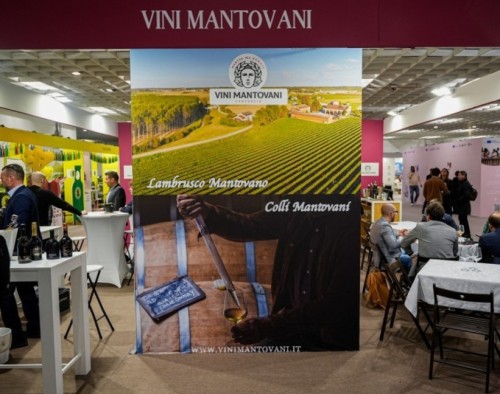
Cucina italiana ad Atene, la Lombardia partecipa con quindici consorzi

Youth and Future a Palazzo Reale: le parole dei giovani diventano opere d’arte

Fibra ottica in provincia di Como: 145 comuni nel Piano Bul, oltre 144.000 immobili attivabili

Leone, il neonato ritrovato a Cinisello Balsamo respira senza supporto

Gaza, dalla Lombardia altri 150mila euro per acqua e assistenza agli sfollati
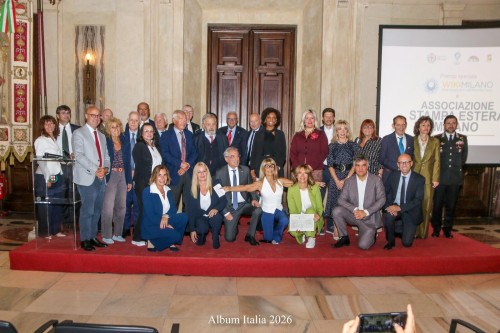
Milano premia i suoi protagonisti: a Palazzo Marino otto “Volti della Metropoli” che raccontano il futuro della città

Premio Volti della Metropoli: a Palazzo Marino i riconoscimenti alla VI edizione