They didn't have steroids, high-altitude training or high-tech shoes, but ancient Olympians can still teach us something about sporting technique.
New research indicates that the hand-held weights that Greek pentathletes swung in the standing long jump increased the power the jumper's muscles generated and so lengthened the distance they leapt1. Even without the power boost, the weights, called halteres, would have put an extra 17 cm on a 3-metre jump, the study calculates.
"It's a bit counterintuitive," says Alberto Minetti, the exercise physiologist at Manchester Metropolitan University, UK, who led the study. "If it were two pieces of luggage, it would be disadvantageous," he jokes. The halteres depicted in painted artefacts from around 700 BC were pairs of small, curved or handled weights made of stone or lead.
Minetti and his colleague Luca Ardigó compared increasing haltere masses using a computer simulation of a long-jumper. The duo also studied human volunteers jumping up and down on a platform while swinging their arms forwards.
In both cases, the best athletic performance was produced when the jumper held weights of about three kilograms in each hand; performance declined again when the weights reached about five or six kilos. Swinging lightly weighed-down arms actually generates more power that is transferred to the legs upon take-off, Minetti explains.
Halteres offer a further advantage in the long jump when swung out in front during take-off and then behind during landing, as ancient drawings depict. This, says Minetti, alters the body's centre of gravity just enough to stretch the jump's arc by a few centimetres.
Neill Alexander, who studies the mechanics of human movement at the University of Leeds, UK, agrees that the swinging weights add more muscle to the job of jumping. "Athletics is the art of cheating without actually breaking the rules, and this is a fine example of it," he says.
The range of masses that maximized both effects - two to nine kilograms - matches the range of halteres that archeologists have found, hinting that ancient sports training was both an art and a science.
Modern sports that rely on jumping, such as volleyball, basketball, figure skating and ski jumping, could also benefit from the use of hand-held weights, Minetti suggests.
References
# Minetti, A. E. & Ardigó, L. P. Halteres used in ancient Olympic long jump. Nature, 420, 141 - 142, (2002). |Article|
Articoli Correlati



Ultimi Articoli

JEnerational Mentoring presentato a Mi prendo il Mondo – Dialogo tra generazioni a Parma
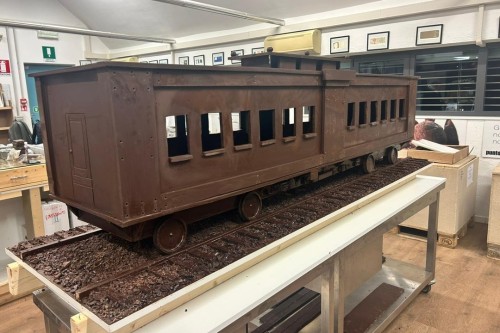
Treno di cioccolato record a Palazzo Lombardia – Aperto il 39° piano

Strage Crans-Montana – Dimessi due giovani da Niguarda dopo l'incendio

Strapazzami di coccole Topo Gigio il Musical: una fiaba che parla al cuore

Goldoni al Teatro San Babila di Milano con La Locandiera

Ceresio in Giallo chiude con 637 opere: giallo, thriller e noir dall'Italia all'estero

Milano celebra Leonardo — al Castello Sforzesco tre iniziative speciali per le Olimpiadi 2026

Trasporto ferroviario lombardo: 780.000 corse e 205 milioni di passeggeri nel 2025

Piazza Missori accoglie la Tenda Gialla – Tre giorni di volontariato under zero con i Ministri di Scientology